
Whether you are an athlete, an active professional, or someone who enjoys staying fit, shoulder health plays a crucial role in your ability to move efficiently and perform at your best. Unfortunately, shoulder injuries are common and often underestimated. These injuries can cause pain, weakness, and reduced mobility that interfere with daily tasks, recreational activities, and athletic performance. The good news is that with early identification and the right physical therapy approach, many people can recover fully and prevent further issues.
At Preferred Therapy Services, we help patients understand how shoulder conditions develop and provide targeted treatment plans that restore strength, function, and confidence.
Why the Shoulder Is So Prone to Injury
The shoulder is the most mobile joint in the body, allowing you to reach overhead, behind your back, and across your body. This mobility makes it useful but also vulnerable. The shoulder depends on a complex system of muscles, tendons, and ligaments for stability. When even one part of this system becomes irritated or injured, it can throw off the entire joint’s mechanics.
Common Shoulder-Related Injuries
- Rotator cuff strains and tears
- Shoulder impingement
- Labral tears
- Bursitis or inflammation in the joint
- Tendonitis from overuse
- Dislocation or instability
These conditions may be caused by repetitive movements, poor posture, direct trauma, or age-related wear and tear.
How Shoulder Injuries Limit Your Strength and Endurance
Shoulder pain often begins subtly, with mild aching or weakness during movement. Over time, that discomfort can affect your ability to lift, push, pull, or even carry items without fatigue or compensation. Muscles that normally work together begin to shift responsibility to others, leading to imbalances and strain. You may notice:
- Difficulty performing overhead tasks
- Decreased range of motion in one or both shoulders
- Reduced grip strength
- Compensation in the neck, back, or opposite arm
- Increased fatigue during repetitive motion or training
All of these changes impact your performance, whether on the field, in the gym, or at work. Without treatment, symptoms often progress and limit your ability to stay active.
How Physical Therapy Addresses Shoulder Injuries at the Source
One of the most effective ways to treat shoulder injuries is through physical therapy. At Preferred Therapy Services, we begin with a detailed evaluation of your posture, shoulder mechanics, joint mobility, and strength. Understanding how your body moves helps us identify the root of the problem rather than just treating symptoms.
Our shoulder rehab plans may include:
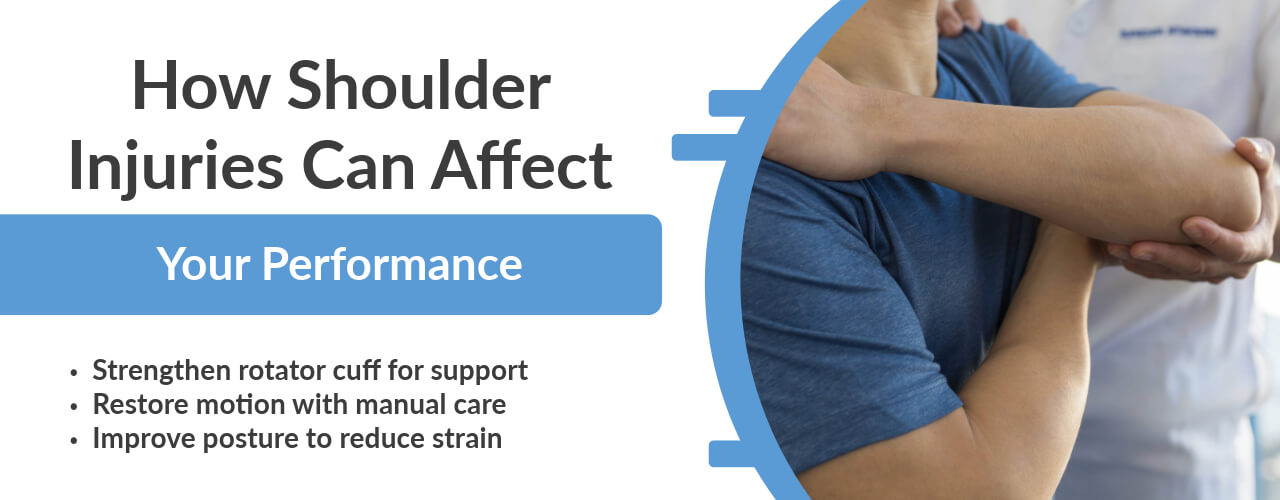
- Manual therapy to reduce stiffness, release tight tissue, and improve joint mobility
- Targeted exercises to rebuild strength in the rotator cuff and shoulder stabilizers
- Postural correction to reduce stress on the shoulder joint
- Neuromuscular training to restore control and proper movement patterns
- Education on safe lifting, overhead activity, and injury prevention strategies
With guided therapy, patients often regain full shoulder function while learning how to move more efficiently.
Performance and Recovery: Why Shoulder Injuries Matter More Than You Think
A minor shoulder issue can have a ripple effect on overall performance. For athletes, even small changes in joint mobility or muscle timing can disrupt throwing, swimming, or weightlifting techniques. For workers and busy parents, shoulder discomfort can make basic tasks like reaching, driving, or carrying children more difficult.
When left unaddressed, these compensations can lead to secondary problems in the neck, back, or elbows. That is why early treatment of shoulder injuries is so important. Physical therapy focuses not only on pain relief but also on restoring the strength, coordination, and range of motion needed to return to full performance safely.
Get the Support You Need to Move Without Pain
Shoulder pain does not need to limit your performance or keep you from the activities you enjoy. With early intervention and a focused treatment plan, most shoulder injuries respond well to physical therapy. At Preferred Therapy Services, we offer comprehensive evaluations, evidence-based care, and ongoing support to help you recover fully and stay strong.
If you are struggling with shoulder pain or have noticed a decline in your performance, contact Preferred Therapy Services today. Our team is here to help you regain control of your movement and feel confident in every lift, reach, and stretch.